
Seismic Retrofitting
Seismic retrofitting is the increase of a building's structural capacity to withstand earthquake loads. A growing number of jurisdictions are introducing seismic performance assessment and documentation schemes for existing buildings, and buildings with documented seismic resilience are expected to retain their value better in sales and rentals. MU2 Architecture offers seismic reinforcement solutions designed to Eurocode 8 and the applicable national standards of the project location.
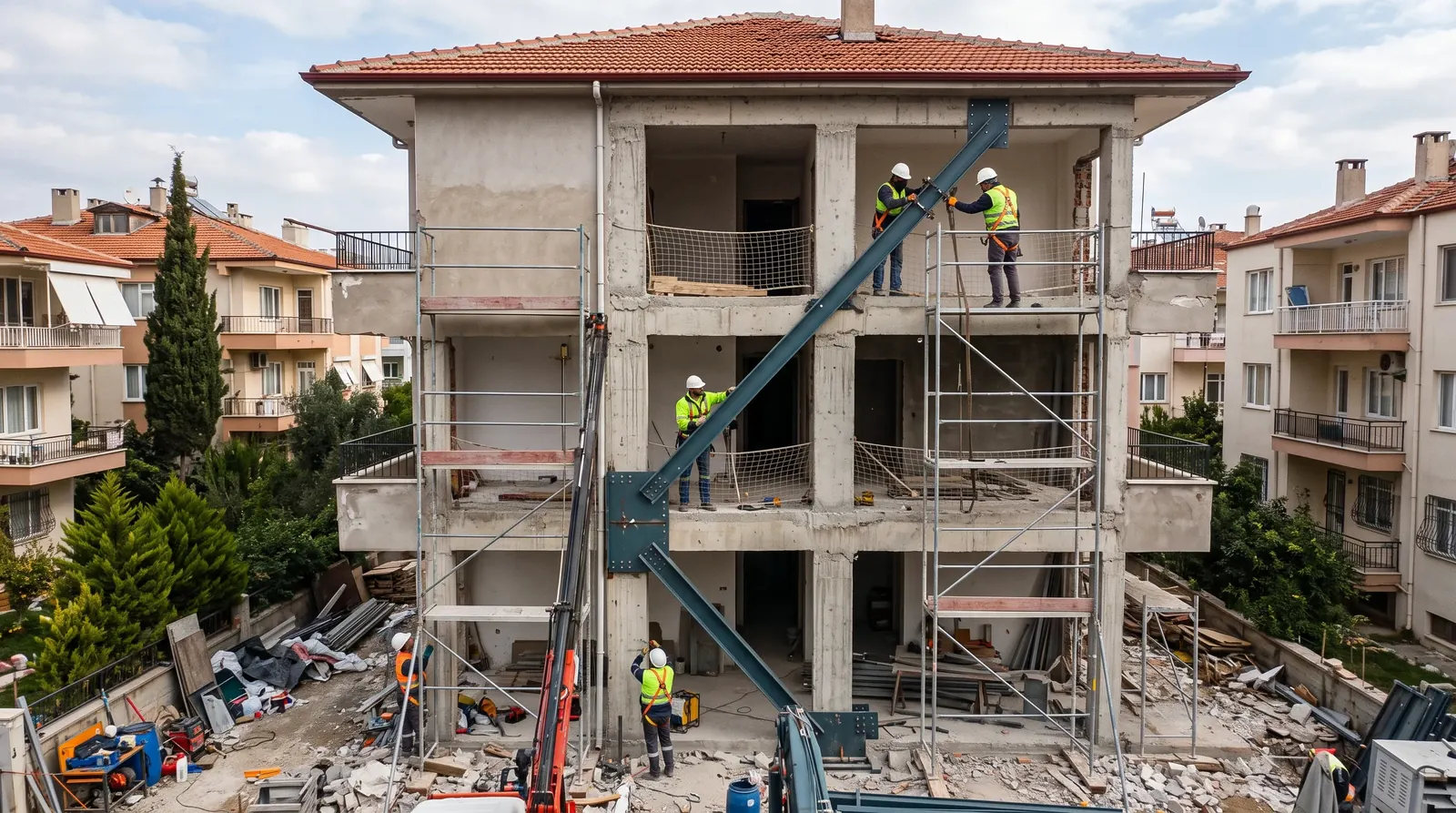
How Seismic Retrofitting Is Assessed
- A seismic performance assessment comes first: it quantifies how the existing structure responds to earthquake loads before any strengthening is designed.
- The analysis follows Eurocode 8 (or the applicable national code, such as TBDY 2018), using the building's geometry, material tests, and soil class.
- The assessment fixes a target performance level, and that target drives the scope, method, and cost of the seismic upgrade.
Common Seismic Retrofit Methods
- Column and beam jacketing: reinforced-concrete or steel jackets add strength and ductility to existing structural members.
- New shear walls: added reinforced-concrete walls stiffen the building and carry lateral earthquake forces down to the foundation.
- Carbon-fiber (FRP) wrapping: a lightweight composite that confines columns and beams without adding significant mass.
- Foundation strengthening: underpinning, enlarged footings, or micropiles carry the upgraded loads into competent soil.
- Base isolation and dampers: for higher performance targets, isolation bearings or energy-dissipation devices cut the seismic forces reaching the structure.
m² Cost Variables: building age and structural type (reinforced concrete/steel/mixed), seismic zone, target seismic performance/certification level, existing structural damage, soil class, static and dynamic analysis needs, material and method used, number of floors and building height, accessibility.
What Is Seismic Retrofitting?
Seismic retrofitting means increasing a building's structural capacity to withstand earthquake loads. A growing number of jurisdictions are introducing seismic performance assessment and documentation schemes for existing buildings, and MU2 Architecture offers seismic reinforcement solutions designed to Eurocode 8 and the applicable national standards of the project location.
What Determines the Cost of Seismic Retrofitting?
Seismic retrofitting costs depend on building age and structural type — reinforced concrete, steel, or mixed — along with seismic zone, target seismic performance or certification level, existing structural damage, soil class, static and dynamic analysis needs, material and method used, number of floors and building height, and accessibility.
What Standards Guide MU2 Architecture's Seismic Retrofitting Approach?
Seismic reinforcement solutions from MU2 Architecture are designed to Eurocode 8 and the applicable national standards of the project location. Seismic retrofitting itself increases a building's structural capacity to withstand earthquake loads, reflecting a broader trend of jurisdictions introducing seismic performance assessment and documentation schemes for existing buildings.
Percentages and timeframes on these pages (e.g., energy savings, value increase, expected lifespan) are typical industry ranges; actual results vary by building, existing condition, and scope of work, and do not constitute a guarantee.


