
Thermal Insulation
Thermal insulation is a system that minimizes heat transfer through a building's exterior walls, roof, foundation, and ceilings, reduces energy consumption, and increases indoor comfort. Properly applied thermal insulation can reduce heating and cooling costs by up to 40-50%, depending on the building and its existing condition. Building energy codes worldwide — including the EU's Energy Performance of Buildings Directive (EPBD) framework — make thermal insulation mandatory for new buildings in most jurisdictions.
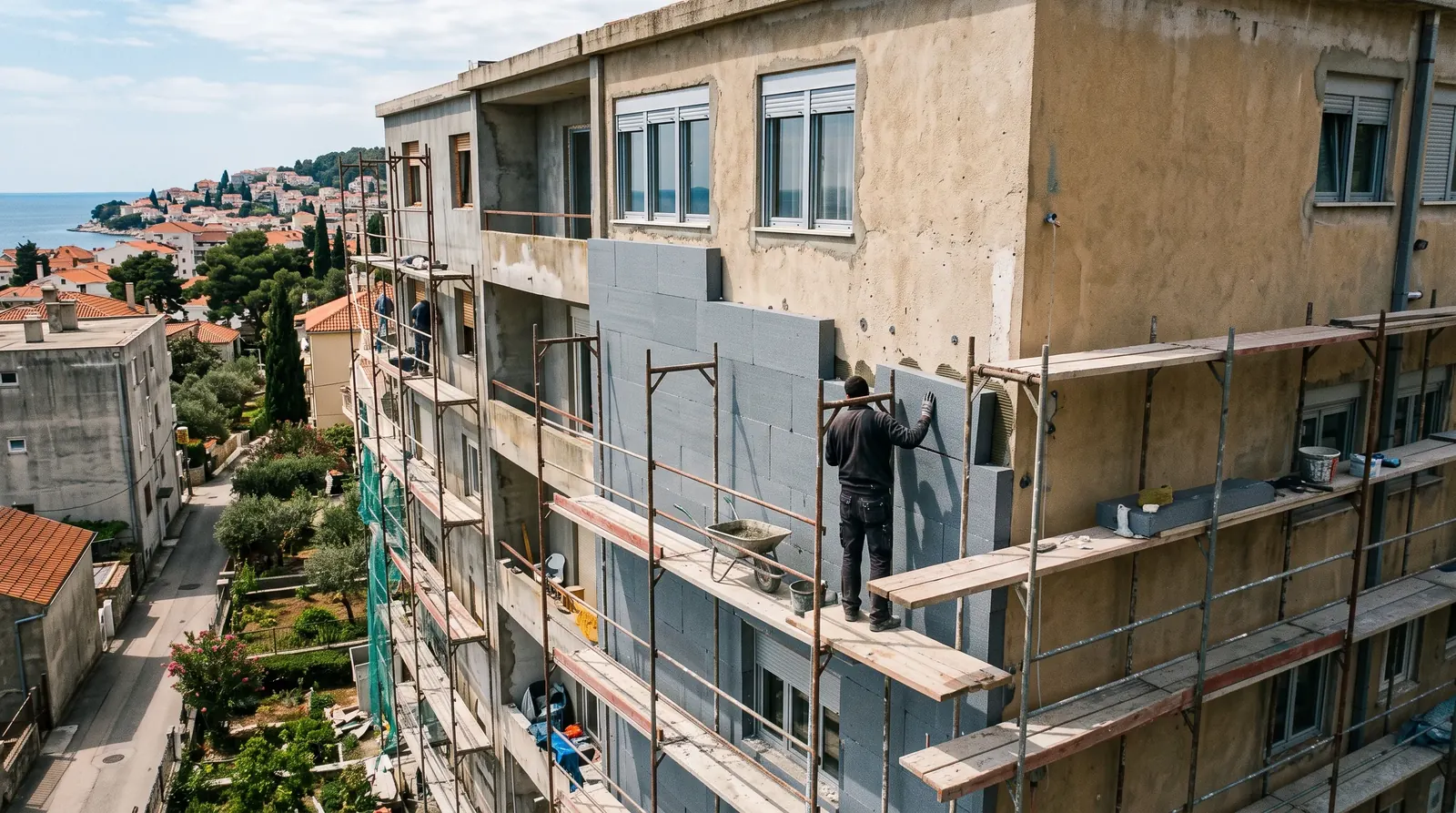
Thermal Insulation Materials
- EPS (White/Insulation Board): most economical option; standard for exterior wall insulation. Density: 16-22 kg/m³.
- XPS (Extruded): high compressive strength; preferred for foundations, floors, and inverted roofs. Water absorption <0.5%.
- Glass Wool: non-combustible (Class A1); also provides sound insulation. Ideal for roofs and interior walls.
- Stone Wool: temperature resistance above 650°C; used in industrial buildings and as fire barriers.
- PIR / PUR Foam: lowest thermal conductivity coefficient; superior performance in areas requiring thin profiles.
m² Cost Variables: material type (EPS/XPS/glass wool/PIR), board thickness (3-15 cm), number of floors and accessibility, existing coating removal needs, structural correction requirements, regional labor price differences, seasonal application conditions, detail complexity (windows/corners).
What Is Thermal Insulation?
Thermal insulation is a system that minimizes heat transfer through a building's exterior walls, roof, foundation, and ceilings, reducing energy consumption and increasing indoor comfort. Building energy codes worldwide, including the EU's EPBD framework, make it mandatory for new buildings in most jurisdictions.
What Determines the Cost of Thermal Insulation?
Material type such as EPS, XPS, glass wool, or PIR, along with board thickness, number of floors and building accessibility, and the need for existing coating removal or structural correction all affect pricing. Regional labor rates, seasonal application conditions, and detail complexity also factor in, so exact costs depend on these project-specific variables.
What Materials Are Used for Thermal Insulation?
EPS insulation board offers the most economical option, while XPS provides high compressive strength for demanding applications. Glass wool is non-combustible and adds sound insulation, stone wool withstands temperatures above 650°C, and PIR/PUR foam delivers the lowest thermal conductivity coefficient among these options.
Percentages and timeframes on these pages (e.g., energy savings, value increase, expected lifespan) are typical industry ranges; actual results vary by building, existing condition, and scope of work, and do not constitute a guarantee.