Waterproofing
Waterproofing is a technical system designed to protect building elements from water infiltration caused by groundwater, rainwater, humidity, and wet room usage. Properly selected and applied waterproofing can extend a building's lifespan by decades, prevents mold and mildew formation, and minimizes structural damage risks.

1. Foundation & Retaining Wall Waterproofing
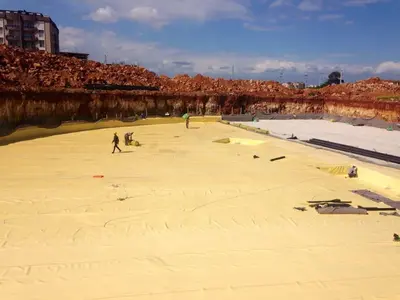
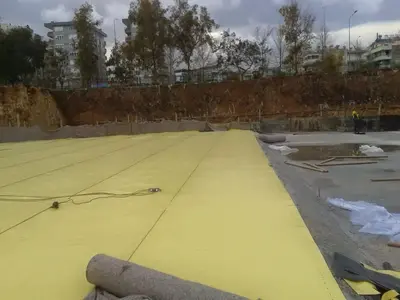
Protection against groundwater pressure and soil moisture. Bituminous membrane, PVC membrane, or liquid waterproofing systems are applied. Retaining wall surfaces are first sanded, cleaned with epoxy primer, and then double-layer bituminous membranes are adhered. A drainage layer is created below the foundation level.
m² Cost Variables: foundation depth, groundwater level, soil type (clay, sand, rock), existing crack condition, accessibility, material quality (APP/SBS/PVC), drainage requirements, ground preparation costs.
2. Terrace & Roof Waterproofing
Systems that prevent rainwater penetration in flat roofs, terraces, and pitched roofs. Inverted waterproofing is preferred for terraces; direct membrane application for pitched roofs. PVC, TPO, EPDM, and modified bituminous membranes are used. Rain gutters and valley details are made watertight with special profiles.
m² Cost Variables: roof pitch, area size, existing coating condition, parapet height, number of gutters/valleys, wind load zone, accessibility (crane/ladder), existing insulation removal needs, detail complexity.
3. Wet Room Waterproofing (Bathroom, Kitchen, WC)
Applied in areas with continuous water contact: bathrooms, kitchens, laundry rooms, and WCs. Liquid polyurethane or cement-based flexible waterproofing materials are applied to floors and walls up to 30 cm height. Shower enclosures and bathtub surroundings are waterproofed up to 180 cm height. Joints and corner connections are reinforced with special mesh tapes.
m² Cost Variables: area size, wall surface type (drywall/concrete/brick), existing tile condition, siphon and drain location, leakage to lower floor, material type (polyurethane/cement-based), number of layers, detail complexity.
4. Pool & Water Tank Waterproofing
Waterproofing for swimming pools, fire water tanks, rainwater collection tanks, and drinking water reservoirs requires chemical and physical resistance. Epoxy-based or polyurethane-based liquid waterproofing systems are preferred. In pools, 2-3 layers of liquid waterproofing are applied before ceramic tiling; water tank interior surfaces are coated with food-contact-safe materials.
m² Cost Variables: pool/tank volume, indoor/outdoor location, water pressure depth, existing concrete quality, chemical usage intensity (chlorine/bromine), food contact requirement, accessibility, preparation work (sanding/cleaning).
5. Injection Waterproofing
In existing structures, polyurethane, epoxy, or cement-based materials are injected under pressure at leakage points to create a watertight barrier. Particularly effective at foundation joints, retaining wall cracks, and tunnel passages. Injection holes are drilled at 30-45 cm intervals; the material crystallizes by penetrating concrete pores.
m² Cost Variables: leakage intensity, concrete porosity, required injection pressure, accessibility, history of recurring leaks, material used (polyurethane/epoxy/cement), number and depth of holes, post-installation access difficulty.
6. Bituminous Membrane Waterproofing
Torched-on (flame melting), self-adhesive, and APP/SBS modified bituminous membranes. The most commonly used waterproofing system. Applied as 3-5 mm thick sheets reinforced with glass or polyester fibers. Widely used for foundations, roofs, terraces, and bridges. Low UV resistance requires protective coating.
m² Cost Variables: membrane quality (APP/SBS), number of layers (single/double), reinforcement type (glass/polyester), application method (flame/self-adhesive), UV protection needs, substrate preparation, detail workmanship (corners/parapets/chimneys), seasonal factors.
7. PVC / TPO Membrane Waterproofing
Synthetic polymer-based systems with high flexibility and UV resistance. TPO (Thermoplastic Polyolefin) is environmentally friendly and recyclable. PVC has high chemical resistance and long lifespan (30+ years). Applied by mechanical fastening, adhesion, or ballasting. Preferred for terrace roofs and large commercial buildings.
m² Cost Variables: membrane thickness (1.2-2.0 mm), color (white/reflective = energy savings), fastening method (mechanical/adhesive/ballast), area size, detail complexity, substrate preparation, warranty period (10-20-30 years).
8. Liquid (Polyurethane) Waterproofing
Flexible and seamless waterproofing systems applied by brush, roller, or spray. Single or dual-component polyurethane-based materials are used, applied at 1.5-3 mm thickness. Adapts to complex geometries and details. Ideal for terraces, balconies, pools, and wet rooms.
m² Cost Variables: application thickness, number of layers, primer needs, surface roughness, air temperature and humidity (application conditions), application method (brush/roller/spray), area size, existing surface cleaning costs.
9. Bentonite Clay Waterproofing
Natural sodium bentonite clay swells upon contact with water to form a watertight gel layer. Applied as laminated panels on cardboard or geotextile carriers. Preferred for foundation waterproofing, tunnels, and channels. Environmentally friendly and chemical-free. Installed in dry conditions; activated by soil backfill or concrete pouring.
m² Cost Variables: bentonite thickness, carrier type (cardboard/geotextile), installation direction (vertical/horizontal), activating material (soil/concrete), soil type, accessibility, installation area size, transport distance.
10. Inverted Roof Waterproofing
In terrace roofs, the insulation material is placed above the protective concrete slab rather than below it. XPS or stone wool thermal insulation boards are placed on top of the waterproofing membrane; the top is protected with a filter layer and planting soil or walkway. The membrane is protected from UV radiation and mechanical damage by the thermal insulation. A mandatory system for green roof applications.
m² Cost Variables: insulation board thickness (XPS 5-20 cm), green roof layer depth, drainage layer needs, root barrier usage, accessibility, existing load-bearing capacity (weight calculation), detail complexity.
Note: The above waterproofing types can be combined according to project needs. For example, bituminous membrane + bentonite clay combination for foundation waterproofing; PVC membrane + inverted roof system for terraces.
What is waterproofing?
Waterproofing is a technical system that protects building elements from water infiltration caused by groundwater, rainwater, humidity, and wet room usage. Properly selected and applied waterproofing can extend a building's lifespan by decades and prevents mold and mildew formation.
What determines the cost of waterproofing?
Cost depends on project-specific variables such as foundation depth or roof pitch, existing damage condition, accessibility, material quality, and application method. Because these vary by project, MU2 Architecture provides a free site inspection and project analysis before any firm quotation.
What waterproofing materials and methods are used?
MU2 Architecture applies bituminous membranes, PVC/TPO membranes, liquid polyurethane systems, bentonite clay, injection waterproofing, and inverted-roof systems, selected according to the specific application area — foundations, terraces and roofs, wet rooms, or pools and water tanks.
Do you offer a free site assessment?
Yes. MU2 Architecture offers a free inspection, detailed project analysis, and quotation for waterproofing projects in Türkiye and Croatia; final pricing is confirmed only after this assessment, not from the ranges described on this page.
Can different waterproofing types be combined?
Yes — the waterproofing types described above can be combined according to project needs, for example a bituminous membrane plus bentonite clay combination for foundation waterproofing, or a PVC membrane combined with an inverted-roof system for terraces.
Percentages and timeframes on these pages (e.g., energy savings, value increase, expected lifespan) are typical industry ranges; actual results vary by building, existing condition, and scope of work, and do not constitute a guarantee.