
Who Does What in a Turnkey Project: General Contractor, Subcontractors, and the Owner
"Turnkey" can make it sound like one person does everything, but a turnkey project still involves a general contractor, a set of subcontractors, and the owner — the model changes how their responsibilities are organized, not how many people are involved. Understanding who does what in a turnkey project matters most exactly when something needs fixing, a schedule slips, or a decision has to be made: knowing which of the three parties owns that decision saves time and prevents the kind of finger-pointing that happens when responsibility was never written down in the first place. This guide walks through the role of the general contractor, the role of subcontractors, and the role the owner keeps even in a fully turnkey arrangement — and answers the practical questions that tend to come up once construction is actually underway.
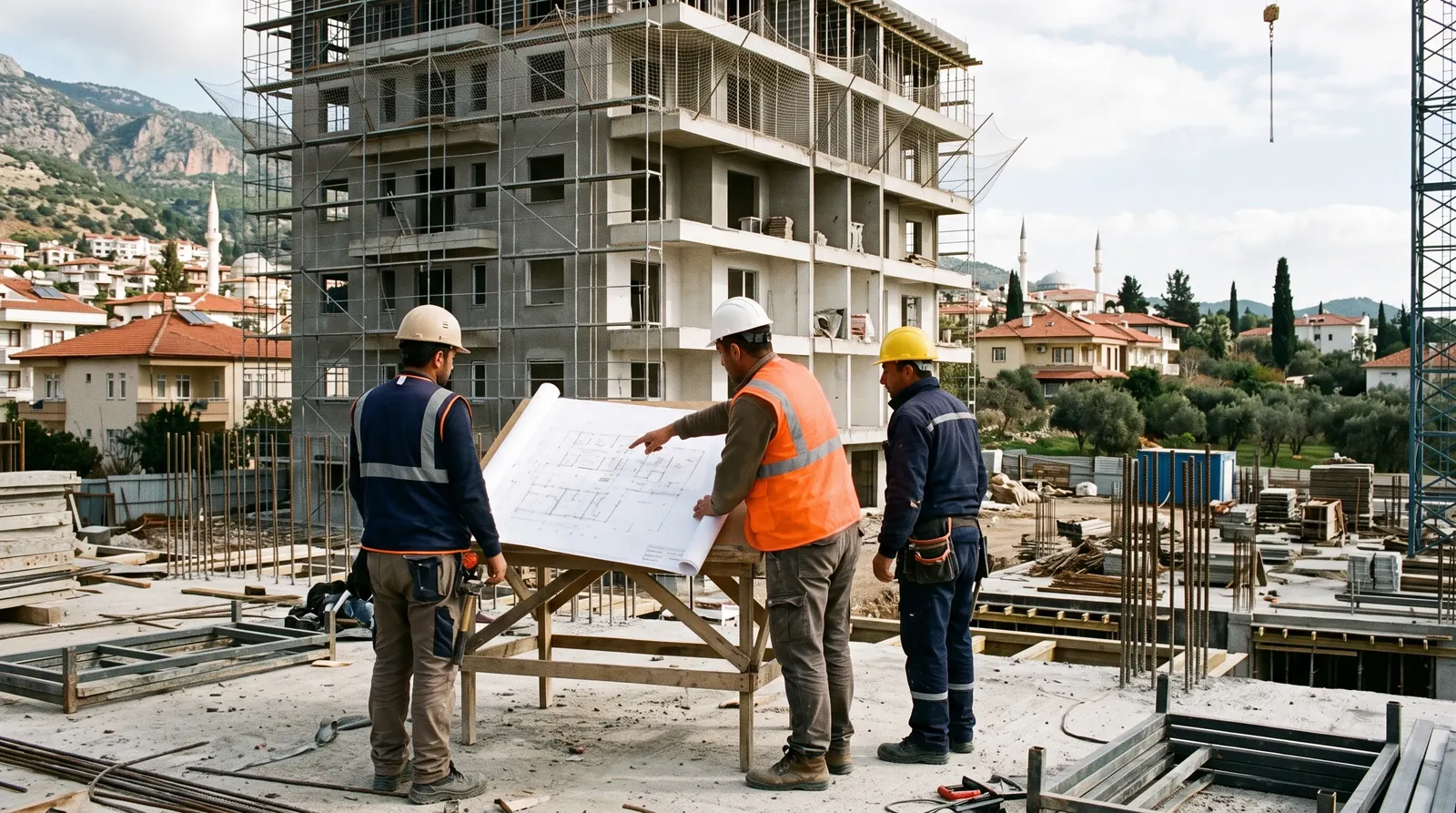
The Owner: Fewer Tasks, Not Zero Involvement
In a turnkey project the owner defines the goal, the budget range, and the intended use of the building, then delegates day-to-day coordination to a single contracting entity. That is the core appeal of the turnkey model: instead of holding separate contracts with an architect, a structural engineer, and a builder and coordinating between them personally, the owner has one point of contact responsible for the whole outcome. What a turnkey project does not remove is the owner's role at defined decision points — approving the design, signing off on material selections, reviewing progress at agreed milestones, and approving any change to scope after the contract is signed. An owner who disappears entirely until handover day is taking on more risk, not less, because the decision points still happen; someone else is just making them by default. Staying engaged at the points the contract actually calls for — not more, not less — is what lets the owner benefit from delegated coordination without losing control over the decisions that matter to them.
The General Contractor: Single Point of Responsibility
The general contractor (GC) is the entity that holds the turnkey contract with the owner and is responsible for the entire outcome — design coordination, permitting, procurement, construction, and handover — regardless of how many subcontractors actually perform the physical work. The GC's job is coordination and accountability at the project level: sequencing trades so plumbing rough-in happens before drywall closes the wall, keeping the schedule and budget on track, managing quality across every trade, and being the party the owner can hold responsible if something goes wrong, no matter which specific subcontractor was involved. In effect, the GC absorbs the coordination risk that would otherwise sit with the owner in a traditional delivery model, where the owner might hold separate contracts with several trades and have to resolve conflicts between them directly.
This single point of responsibility is one of the practical reasons owners choose a turnkey delivery model in the first place. An owner does not need to identify which of a dozen subcontractors caused a defect in order to have it fixed — under the turnkey contract, that is the general contractor's problem to solve, not the owner's.
What Does a General Contractor Actually Manage Day to Day?
Day to day, a general contractor's turnkey project management work centers on four things: scheduling (sequencing which trade works when, so each subcontractor's work is ready for the next one), procurement (ordering materials with enough lead time that they arrive when needed, not before or after), quality control (inspecting completed work against the specification before the next trade builds on top of it), and communication (keeping the owner informed at the agreed points, without requiring the owner to chase updates). None of these tasks is glamorous, but a project where they are done well is largely invisible to the owner — problems get caught and resolved before they become visible, which is exactly the point of hiring a single contractor to manage them.
Subcontractors: Specialists Hired for a Defined Scope
A subcontractor is a specialized firm — electrical, plumbing, HVAC, structural steel, glazing, finishes — hired by the general contractor to perform a specific, defined portion of the work. Subcontractors are not hired directly by the owner in a turnkey arrangement; they are contracted to and paid by the general contractor, and their responsibility is to deliver their portion of the work to specification, on the schedule the GC sets for them.
- Scope — subcontractors are responsible for their specific trade, not the coordination between trades; that coordination is the GC's job.
- Contract relationship — a subcontractor's contract is with the general contractor, not the owner, even though the subcontractor's work is physically part of the owner's building.
- Payment — subcontractors are paid by the general contractor according to the GC's own payment terms with them, which is a separate financial relationship from the owner's payments to the GC.
- Quality accountability — a subcontractor answers to the general contractor for the quality of its work; the owner's recourse for a subcontractor's mistake runs through the GC, per the turnkey contract.
The Specialty Trades That Typically Work as Subcontractors
On most turnkey projects, a recognizable set of trades is contracted as subcontractors under the general contractor, even though the exact mix varies by building type:
- Structural trades — reinforced concrete, structural steel, and, on renovation or reinforcement work, specialist firms for carbon-fiber or jacketing systems.
- Building envelope trades — facade cladding, glazing and curtain wall, roofing, and waterproofing membrane installers.
- Mechanical, electrical, and plumbing (MEP) — HVAC, electrical installation, and plumbing/sanitary systems, often the most schedule-sensitive trades because their rough-in has to happen before walls and ceilings close.
- Interior finishing trades — flooring, painting, joinery, cabinetry, and tiling.
- Specialized systems, where relevant — elevators, fire suppression, building automation, or medical-gas systems on healthcare projects.
The general contractor is responsible for sequencing all of these correctly against one another — a facade cannot close before the structural trade finishes, and finishes cannot start before MEP rough-in passes inspection — which is precisely the coordination work that justifies having a single contracting entity rather than the owner managing each trade independently.
Can an Owner Request a Specific Subcontractor?
Yes, within reason: an owner can ask the general contractor to use a specific subcontractor they trust, or to avoid one they have had a bad experience with, and a reasonable GC will usually accommodate this if the request is made early enough to fit the schedule and if the subcontractor can meet the GC's own coordination and quality requirements. What an owner generally cannot do without renegotiating the contract structure is bypass the GC entirely and hold a direct contract with that subcontractor while the rest of the project remains turnkey — doing so reintroduces exactly the coordination burden and the split accountability that the turnkey model exists to avoid.
Does the Owner Ever Deal With Subcontractors Directly?
In a properly run turnkey project, the owner should rarely if ever need to communicate directly with individual subcontractors about work, scheduling, or problems — that routing exists specifically so the owner deals with one point of contact instead of a dozen. It is normal and often useful for an owner to be present on site and observe subcontractor work directly, and a good GC will welcome that visibility; what should not happen is an owner giving direct instructions to a subcontractor that bypass the GC, because that blurs exactly the accountability line the turnkey model is designed to keep clear. If an owner gives a subcontractor an instruction directly and it turns out to be wrong or costly, untangling who is responsible for the resulting cost becomes far harder than it needs to be.
How the Three Roles Interact Across a Project
The interaction between owner, GC, and subcontractors follows a fairly consistent pattern through a project's life cycle. At contract signing, the owner and GC agree scope, price, and schedule; subcontractors are not yet involved. During design and permitting, the GC coordinates the design team (which may include the GC's own staff or subcontracted designers) while the owner reviews and approves at defined checkpoints. During construction, the GC sequences and supervises each subcontractor's work, while the owner's involvement narrows to periodic site visits and sign-off on any requested changes. At handover, the GC delivers the finished building and remains responsible for the agreed warranty period — a period during which subcontractor-caused defects are still the GC's responsibility to resolve, not a new negotiation the owner has to start with the original trade. This pattern is what makes a turnkey project easier to manage from the owner's side than a traditional arrangement: at each stage, the owner knows in advance which of the three roles is active and what, specifically, is expected of them at that stage.
Why Subcontractor Quality Still Matters to the Owner
Even though the owner's contract runs through the general contractor, the actual quality of the finished building depends heavily on the subcontractors the GC selects and supervises. This is why the GC's track record of working with reliable, experienced trade contractors is worth asking about before signing — a general contractor is only as consistent as the network of subcontractors it regularly works with. It is reasonable for an owner to ask a prospective GC which subcontractors they typically use for major trades, how long those relationships have existed, and how the GC handles a subcontractor whose work does not meet specification. A contractor with a stable, long-term subcontractor network is generally better positioned to manage sequencing and quality than one assembling an unfamiliar team project by project, because trades that have worked together before tend to hand off work to each other more predictably and catch conflicts between disciplines earlier.
What Happens If a Subcontractor Goes Out of Business Mid-Project?
Under a turnkey contract, the risk of a subcontractor failing to complete its work — whether due to insolvency, poor performance, or any other reason — sits with the general contractor, not the owner. The GC is contractually responsible for delivering the finished building regardless of which subcontractor performs which portion of the work, so a subcontractor failure is a resourcing problem the GC has to solve, typically by bringing in a replacement trade, without it becoming the owner's problem to negotiate or fund. This is one of the concrete risk-transfer benefits of the turnkey model compared to an owner directly holding separate contracts with each trade, where the owner would otherwise have to source, vet, and contract a replacement themselves.
What a Well-Drafted Turnkey Contract Should Make Clear
Because the practical division of labor between GC and subcontractors is largely invisible to the owner day to day, the contract is what actually defines and protects it. A well-drafted turnkey contract should confirm, in writing, that the GC bears full responsibility for subcontractor work and coordination, that subcontractor payment is the GC's obligation and not something that can create a claim against the owner, and that any subcontractor-caused defect during the warranty period is the GC's responsibility to remedy. For a closer look at what else belongs in that contract before signing, see our companion guide on what to check in a turnkey construction contract.
Choosing a Turnkey Provider With This Structure in Mind
When comparing turnkey providers, it is worth asking directly how each one structures its relationship with subcontractors, rather than assuming every "turnkey" offer works the same way underneath. A general contractor who can clearly explain their scheduling process, their quality-control checkpoints between trades, and how they handle a subcontractor issue is demonstrating exactly the coordination discipline that makes the turnkey model worth choosing in the first place — the same discipline that determines whether an owner spends the project managing paperwork or actually gets to stay out of the day-to-day coordination the model promises. To see this structure applied on real projects, browse our reference projects, learn more about our approach on the residential turnkey projects page, or get in touch to discuss how we structure and supervise subcontractor work on a project like yours.
Can the owner remove or replace a subcontractor they are unhappy with?
The owner can raise a concern about a subcontractor's work with the general contractor, who is responsible for resolving it — including replacing that subcontractor if needed. Because the subcontractor's contract is with the GC, not the owner, the owner does not terminate a subcontractor directly; that request goes through the general contractor, who manages the actual contractual relationship.
Does using multiple subcontractors make a turnkey project less reliable than one contractor doing everything?
No — using specialized subcontractors for each trade is standard practice even within a turnkey model, because no single company realistically has in-house expertise in every trade from structural work to electrical to finishes. Reliability comes from how well the general contractor coordinates and supervises those subcontractors, not from how many of them are involved.
Who pays subcontractors if the owner is late on a payment to the general contractor?
Paying subcontractors is the general contractor's obligation under its own contracts with them, separate from the owner's payment schedule with the GC. A payment delay from the owner is a cash-flow issue for the general contractor to manage, not something that creates a direct claim from a subcontractor against the owner in a properly structured turnkey arrangement.